English| EUR
Suggested for you
More currencies
Book Now
Open today · 07:00–16:00

Costa Rica Whale Watching Tour

Costa Rica Whale Watching Tour — Marino Ballena Expeditions

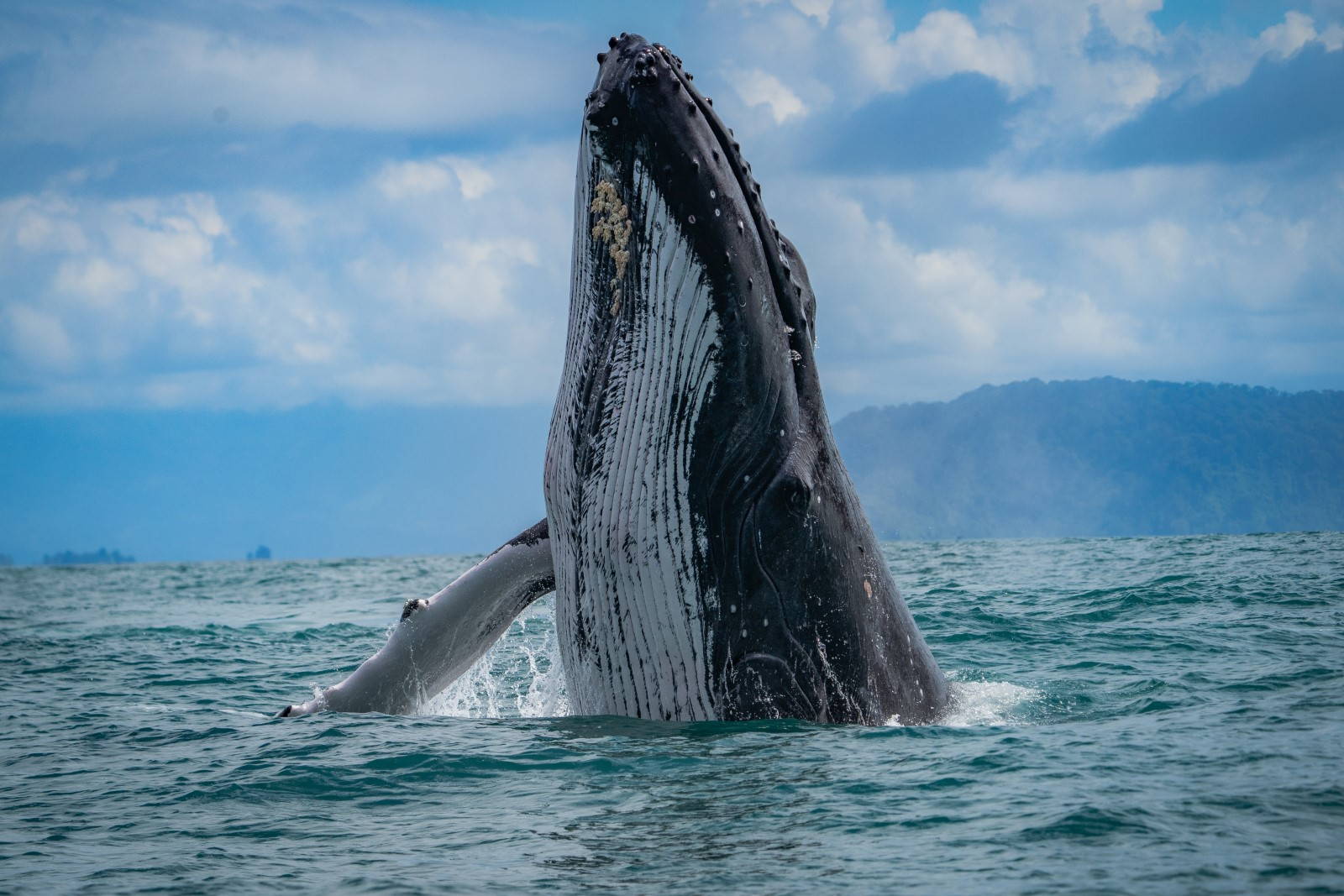
Humpback whales breach in protected waters, dolphins escort your boat through the Pacific

50K+ travelers chose this
Free Cancellation
Right now: Moderate — autumn shoulder season Align your arrival with low tide to access the Whale Tail sandbar.
Free Cancellation
Instant confirmation Mobile voucher Free cancellation Verified partner Small group tours
6 USD
Entrance Fee
Non-resident adult conservation fee
1992
Established Year
Officially created on June 9, 1992
07:00–16:00
Opening Hours
Open daily for all park sectors
07:00–10:00
Best Arrival
Avoid heat and align with low tide
143,861
Annual Visitors
Estimated yearly park visitation
Choose your ticket

Costa Rica Whale Watching tickets at a glance

Compare fares, pick the fit — all bookings are mobile-voucher and eligible for free cancellation where shown.

Marino Ballena Marine Wildlife Boat Expedition 3 hr 30 min
Standard Entry

Marino Ballena Marine Wildlife Boat Expedition

4.5 (98)
$92
  • Entry ticket
  • Mobile voucher
  • Valid same day
  • Free cancellation
Book this ticket
Marino Ballena Whale Watching Adventure 3 hr
Standard Entry

Marino Ballena Whale Watching Adventure

4.5 (106)
€90
  • Entry ticket
  • Mobile voucher
  • Valid same day
  • Free cancellation
Book this ticket
Compare options

Compare Costa Rica Whale Watching ticket options

Visitors planning a costa rica whale watching tour have two primary ways to access the park's marine wonders: a standard daily entry fee or a full-service boat expedition. Selecting the right option ensures you can maximize your time near the iconic Whale Tail sandbar while accessing the best coastal viewing spots.

General Admission Boat Expedition Standard Park Access Full-Service Guided Tour true
Access Type Self-guided walk Guided vessel excursion;Primary focus Beach and tidepools

Verdict: Choose general admission if you prefer a self-paced beach day, or book a costa rica whale watching tour tickets package if you want expert-led marine wildlife observation.

Is a Costa Rica Whale Watching Tour at Marino Ballena Worth the Conservation Fee?

Worth it for wildlife enthusiasts and nature lovers

A costa rica whale watching tour from Marino Ballena National Park delivers exceptional value when you factor in both the 6 USD conservation fee and the boat tour cost. The park protects 13,500 acres of Pacific Ocean habitat where humpback whales migrate twice annually, offering two peak seasons instead of one. Beyond humpback whales, the marine reserve supports dolphins, sea turtles, manta rays, and over 25 coral species. The entrance fee funds vital marine conservation, while boat tours provide expert-guided access to waters where wildlife encounters happen consistently during migration windows. The iconic Whale Tail sandbar adds a unique coastal element you won't find at other Central American whale watching destinations. For visitors seeking authentic biodiversity rather than guaranteed sightings, the combination of low park fees and specialized costa rica whale watching tour tours creates solid value. However, ocean conditions and wildlife behavior remain unpredictable—this is observation of wild marine mammals in their natural habitat, not a zoo visit.

What makes it worth it

  • Two annual humpback whale migration seasons
  • 6 USD conservation fee supports marine protection
  • Consistent dolphin and sea turtle sightings year-round
  • Expert naturalist guides on specialized boats
  • Protected marine habitat with 25+ coral species

Keep in mind

  • Wildlife sightings depend on migration timing and luck
  • Boat tour costs separate from park entry
  • Rough seas can cancel tours during rainy months
  • No refunds for tours without whale sightings

Bottom line: The modest park fee combined with expert-led costa rica whale watching tour tickets delivers strong value for travelers who understand that marine wildlife operates on nature's schedule, not guarantees.

Head to head

Costa Rica Whale Watching Tour vs Nauyaca Waterfalls — Which Should You Choose?

They complement each other; most visitors who do both call the whale watching tour the more thrilling wildlife encounter, while the waterfall trek offers a more active rainforest experience.

Top pick
Whale Watching Tour
Nauyaca Waterfalls Tour
Primary Activity Jungle hiking and swimming
Typical Duration 5–8 hours
Average Price 60–95 USD
Best Time of Day Morning (cooler temperatures)
Physical Intensity High (steep hiking trails)
Key Sights Two-tier tropical waterfall
Booking Requirements Reservations recommended

Verdict: Choose the costa rica whale watching tour if you prioritize marine life and bucket-list sightings, or opt for the Nauyaca Waterfalls if you prefer an immersive hike through the lush Costa Rican canopy.

Featured Experiences

Popular Costa Rica Whale Watching tours & activities

Hand-picked experiences loved by thousands of travelers

Recommended Experience

Powered by GetYourGuide

Another traveler favorite

Powered by GetYourGuide
Uvita Whale Watching Adventure with Expert Guides 3 hours Free Cancellation

Uvita Whale Watching Adventure with Expert Guides

Encounter massive humpback whales up close on a 3-hour ocean expedition along Costa Rica's South Pacific coast

4.8 (23)
FromFrom €82.66
See details
Uvita Whale Watching Ocean Tour 3 hours Free Cancellation

Uvita Whale Watching Ocean Tour

Explore Costa Rica's Pacific waters on a guided marine adventure departing from Uvita's stunning coastline.

4.4 (5)
FromFrom €74.05
See details
Marino Ballena Whale Watching Boat Excursion 3 hours Free Cancellation

Marino Ballena Whale Watching Boat Excursion

Search for humpback whales and dolphins on a guided marine wildlife tour through Costa Rica's stunning coastal park.

4.4 (4)
FromFrom €77.5
See details
What you'll see

What you'll see at Costa Rica Whale Watching

Whale Tail Sandbar

Whale Tail Sandbar

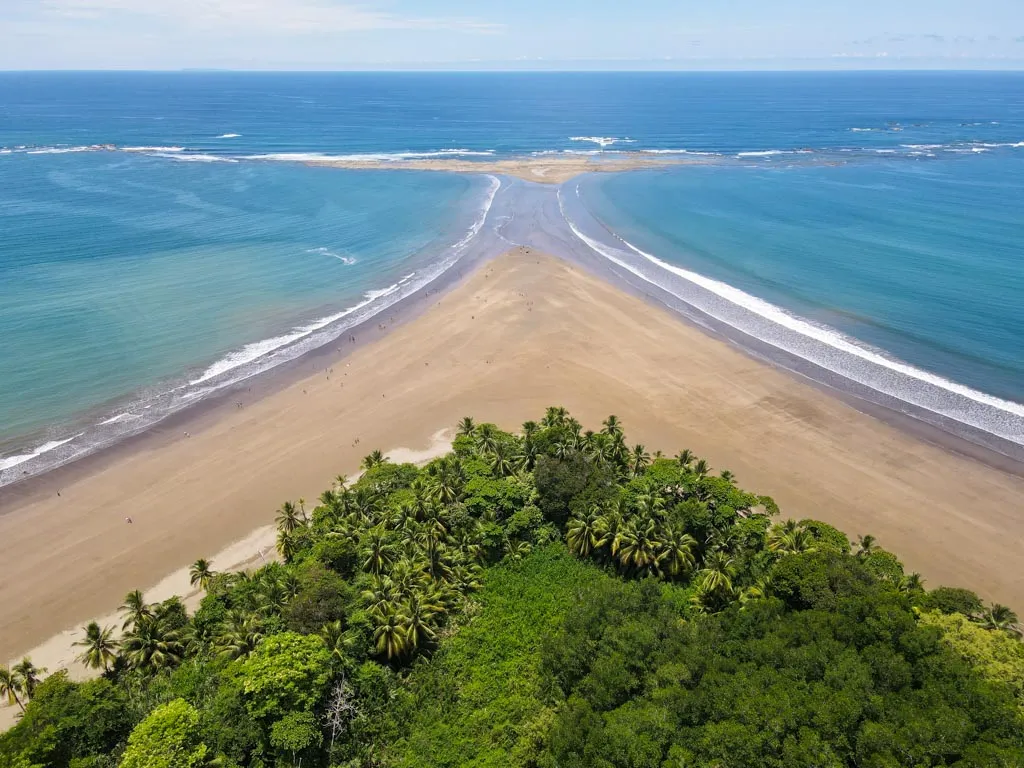
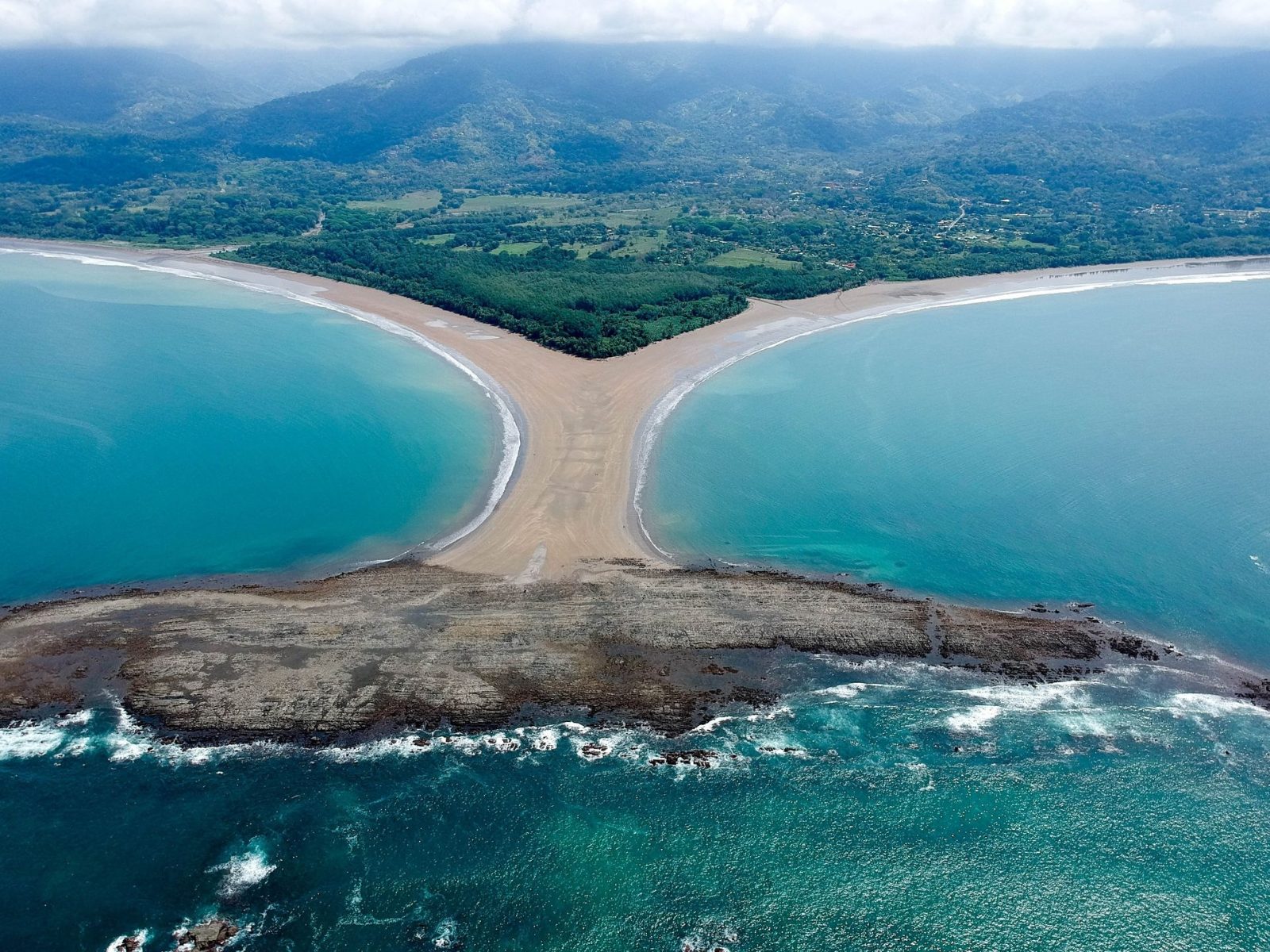
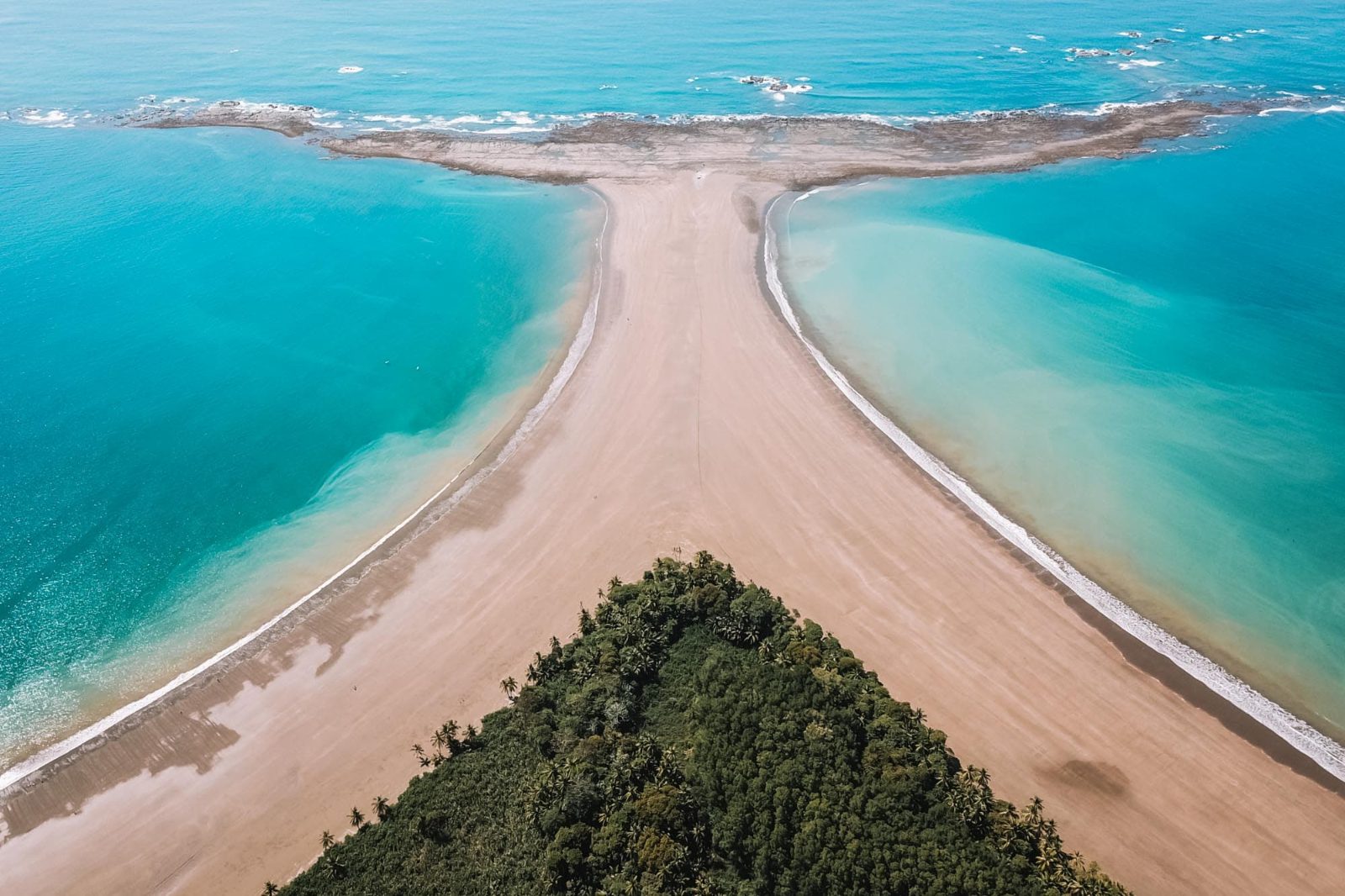
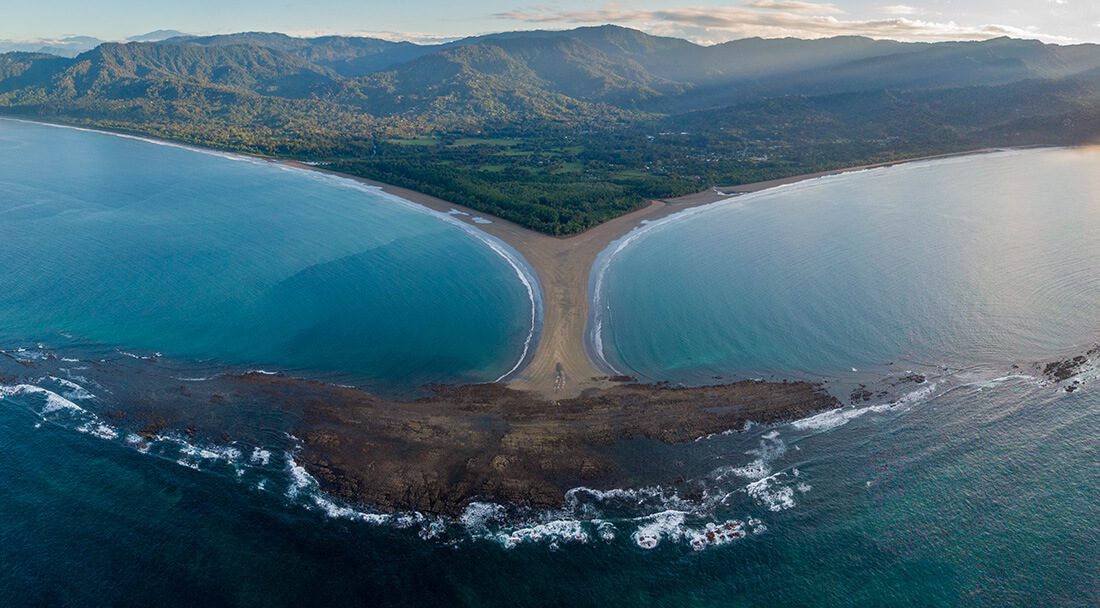
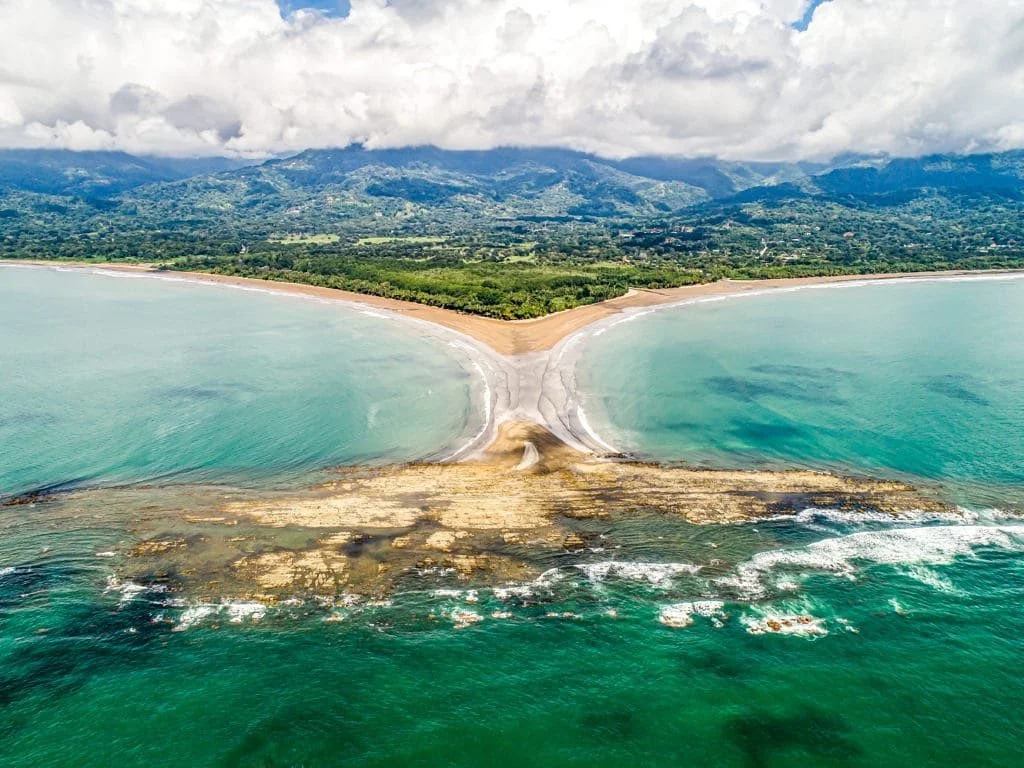
A unique geological formation created by two converging beaches that becomes walkable at low tide.

Isla Ballena

Isla Ballena

A small island located offshore featuring protected coral reefs ideal for snorkeling.

Tres Hermanas Rocks

Tres Hermanas Rocks

A group of three islets that serve as essential nesting grounds for migratory seabirds.

Playa Uvita

Playa Uvita

The primary beach sector of Marino Ballena National Park known for its soft golden sands.

Arco Beach

Arco Beach

A secluded coastal area accessible only via the Ballena sector during low tide conditions.

The experience

What visiting Costa Rica Whale Watching is really like

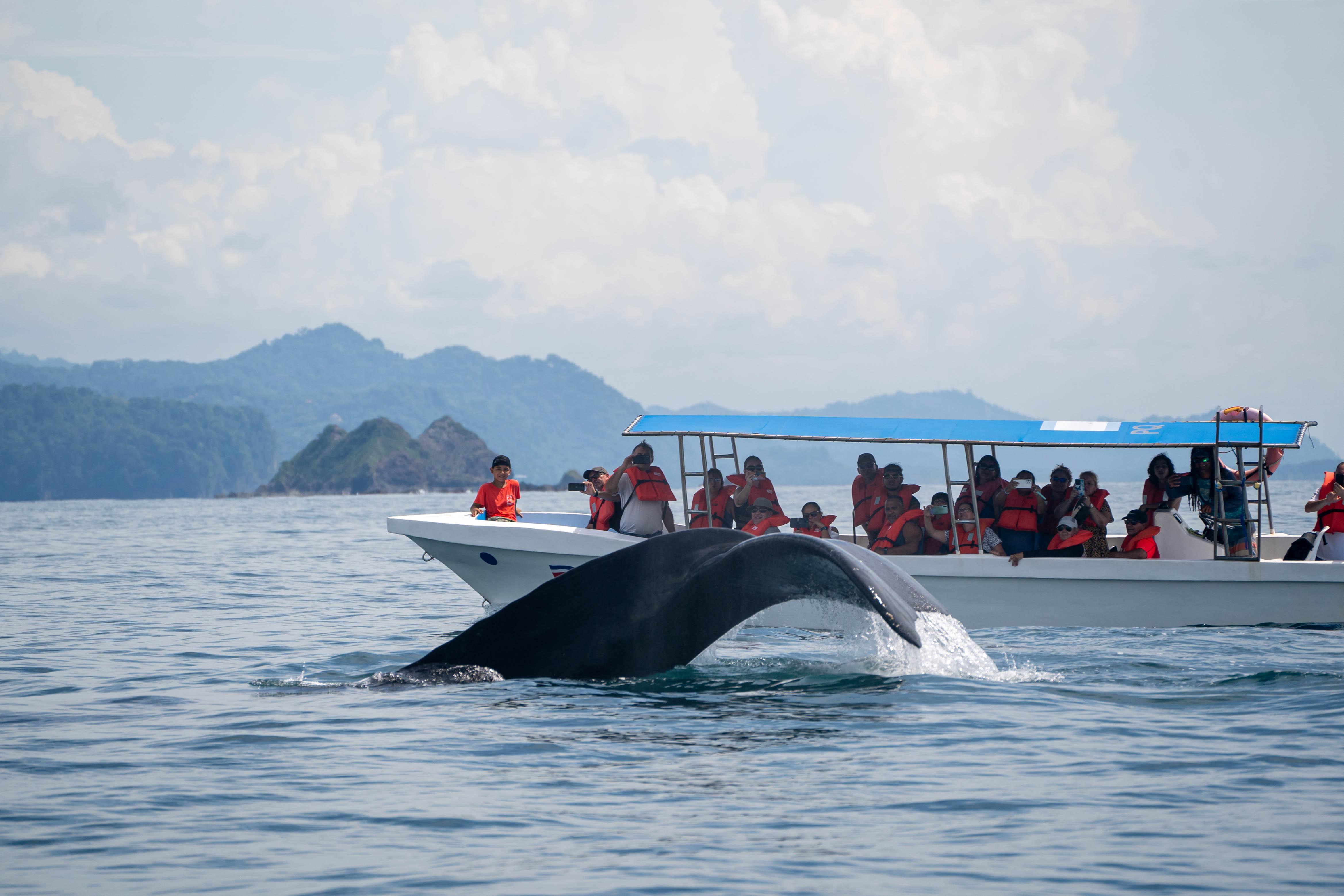
You board a covered fiberglass panga at Uvita's beach ramp as the captain reviews hand signals for whale sightings. The boat clears the river mouth and turns south past the Whale Tail formation, visible as a curved sandbar 400 meters offshore.

Read more Show less

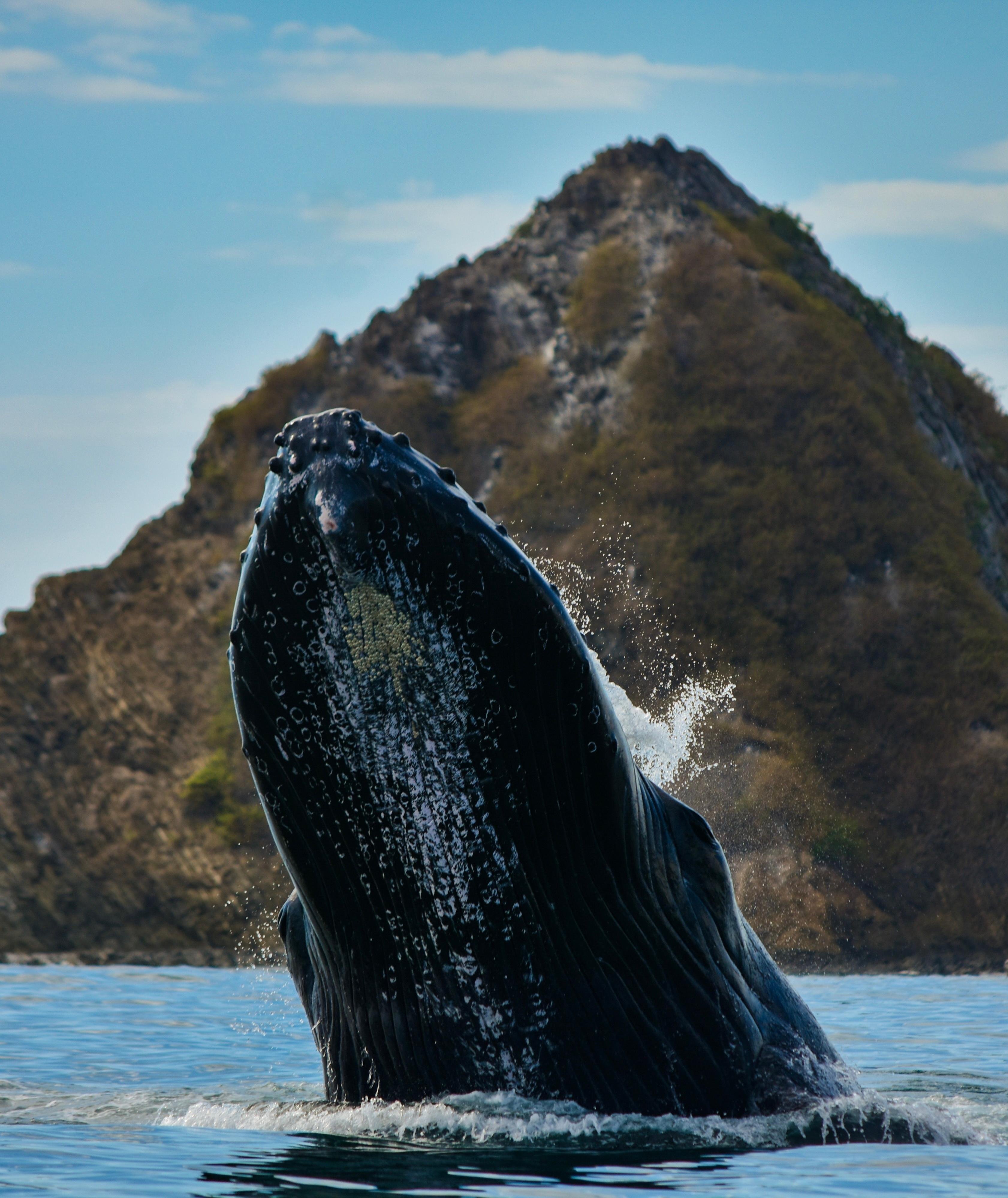
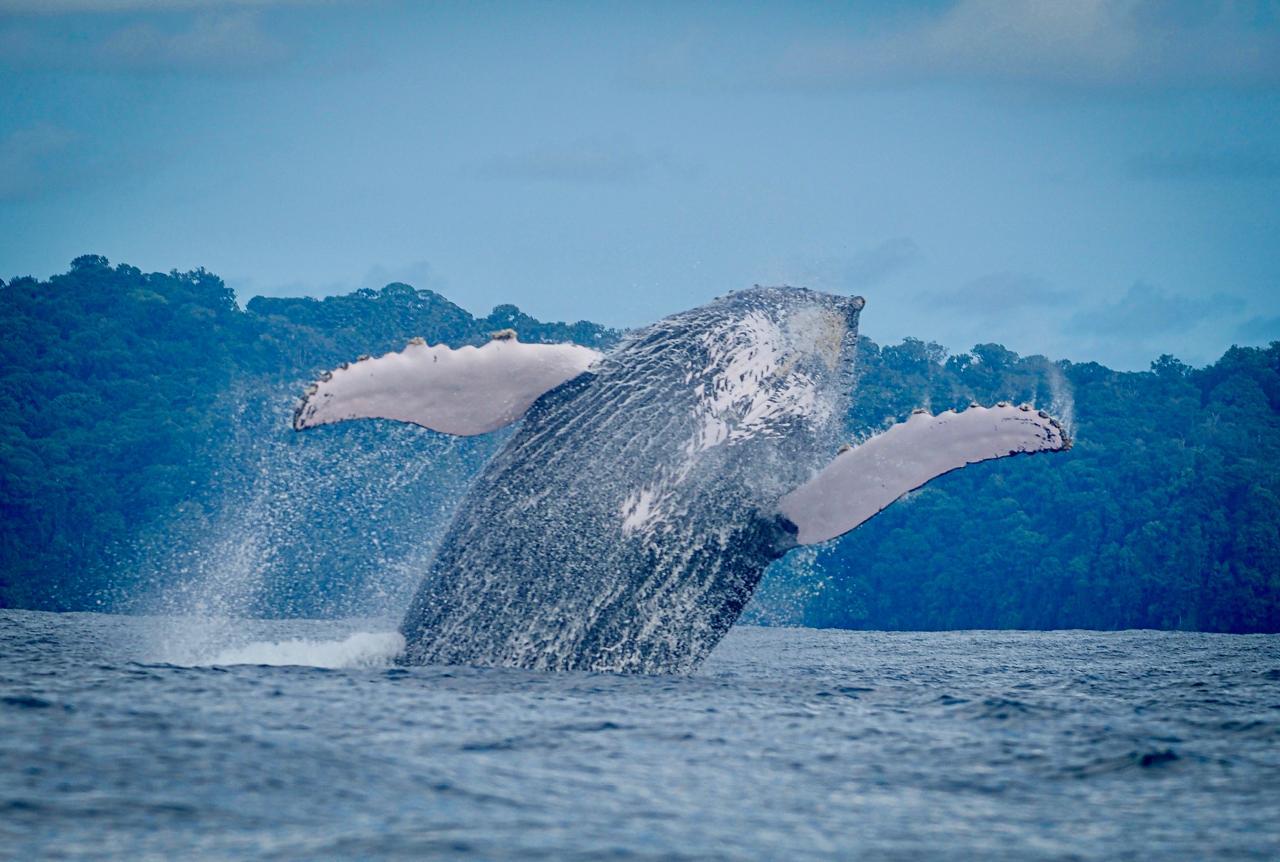
Within ten minutes you reach the first dive zone where humpbacks feed along the reef edge. The captain cuts the engine. You scan the horizon for the heart-shaped blow — the distinctive double spout that signals a surfacing whale.

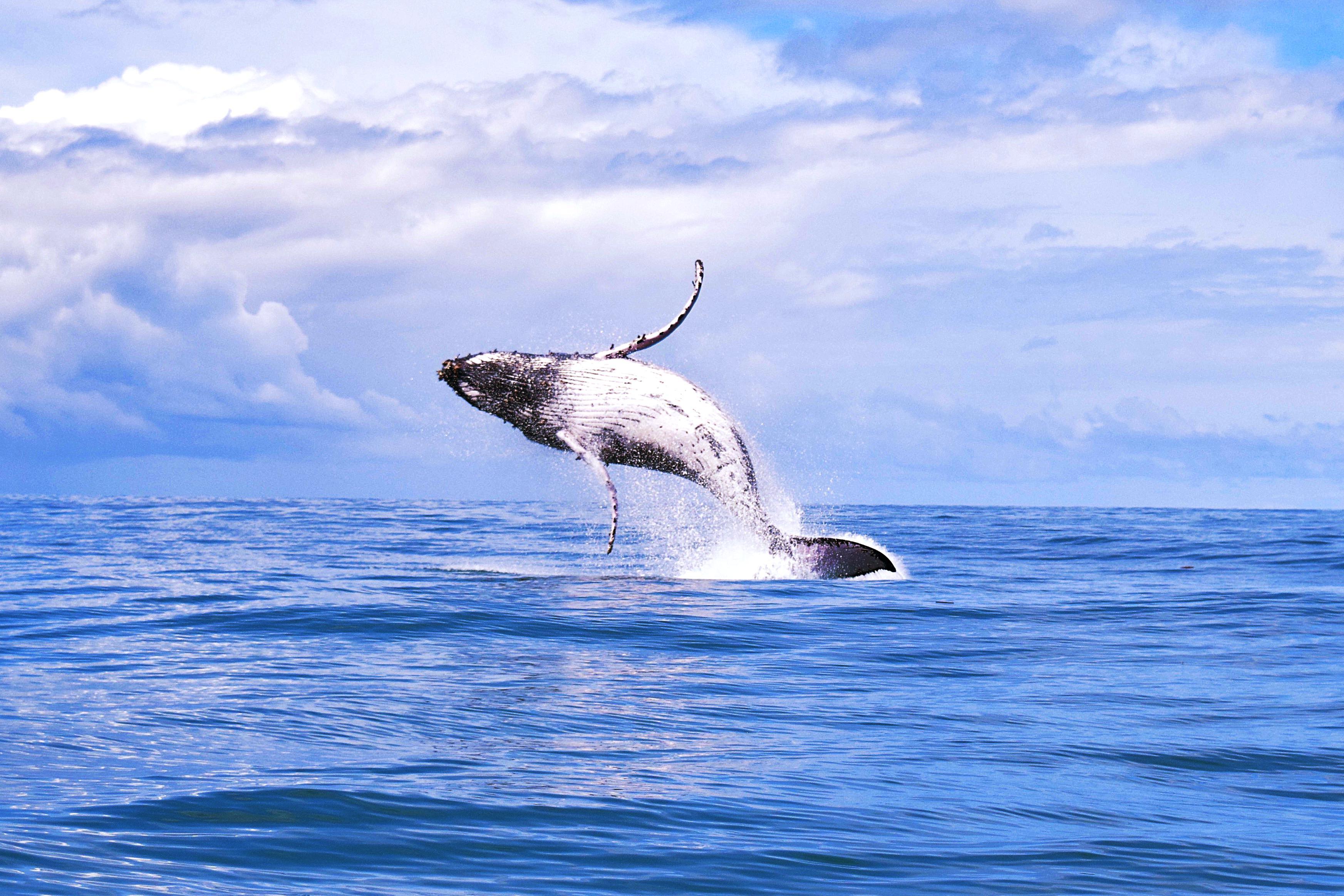
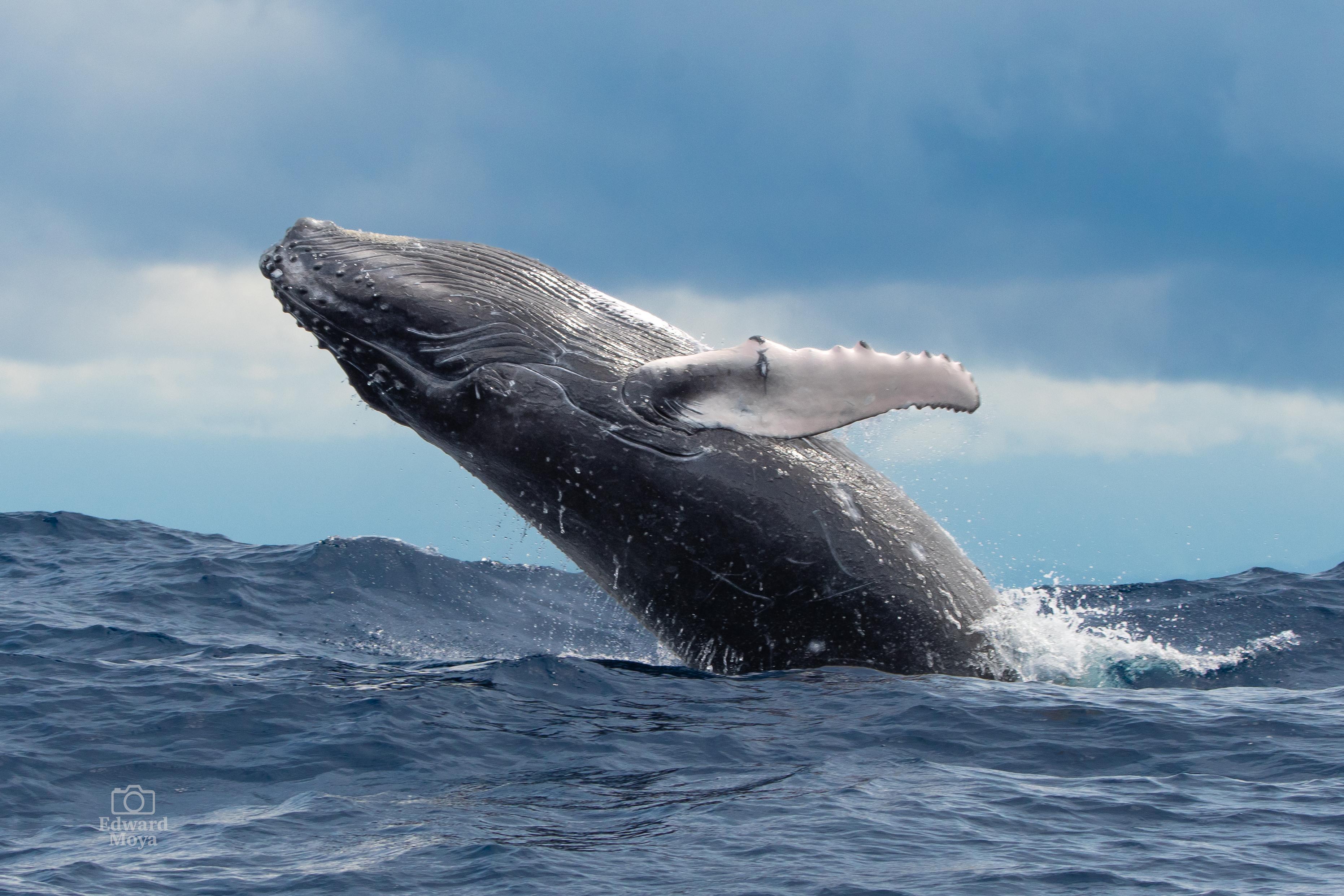
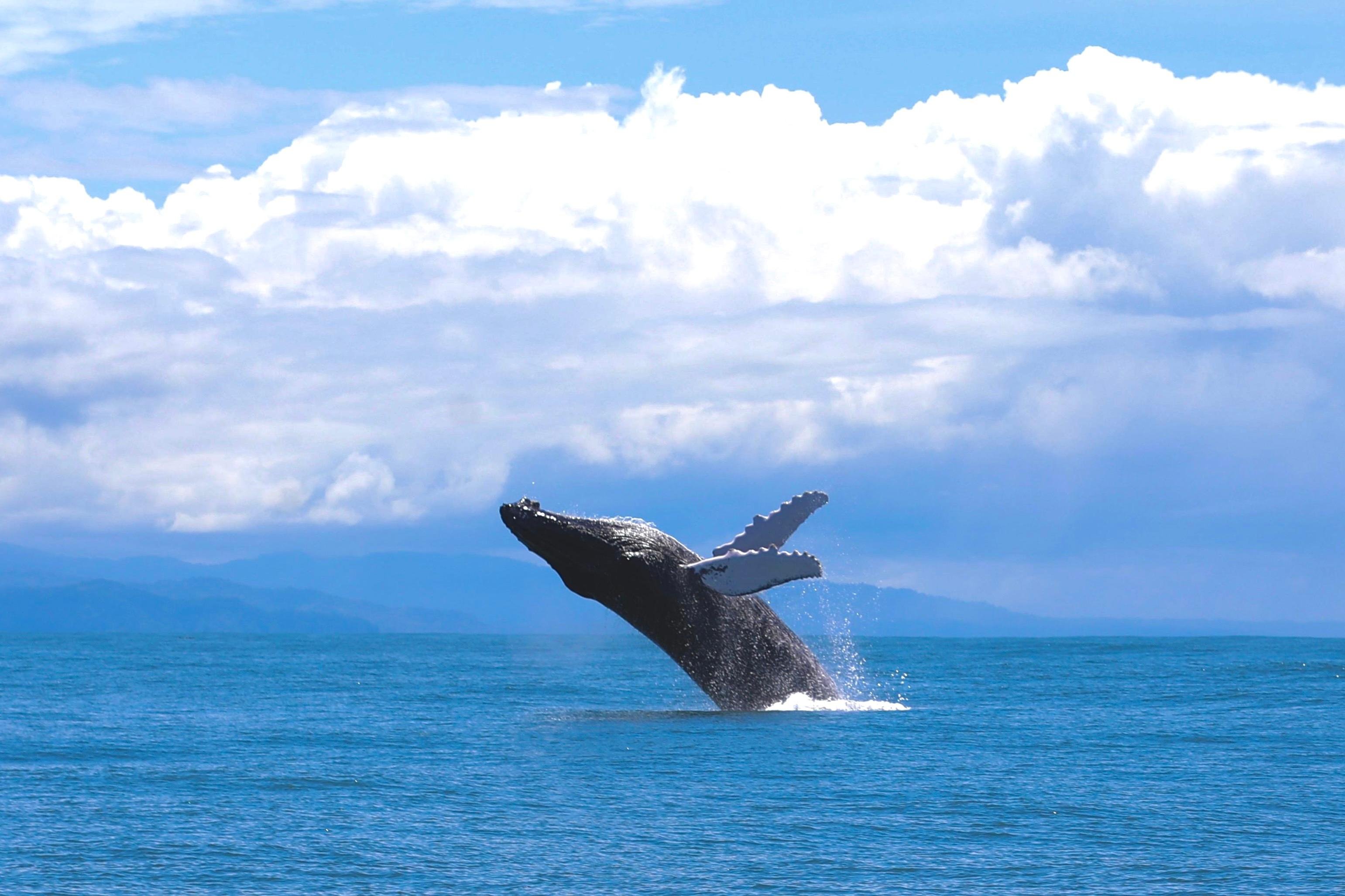
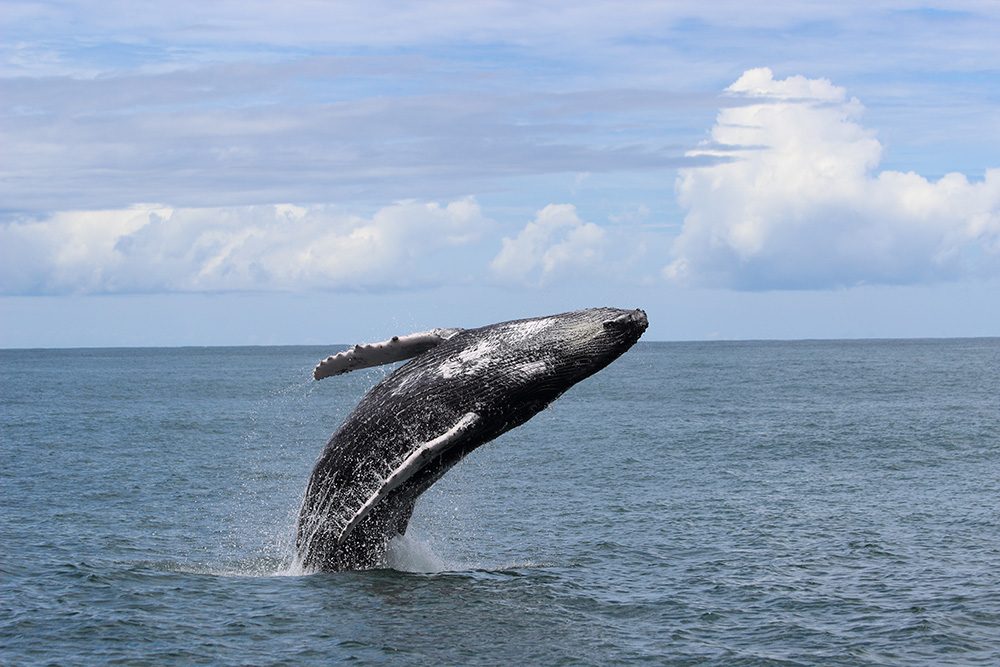
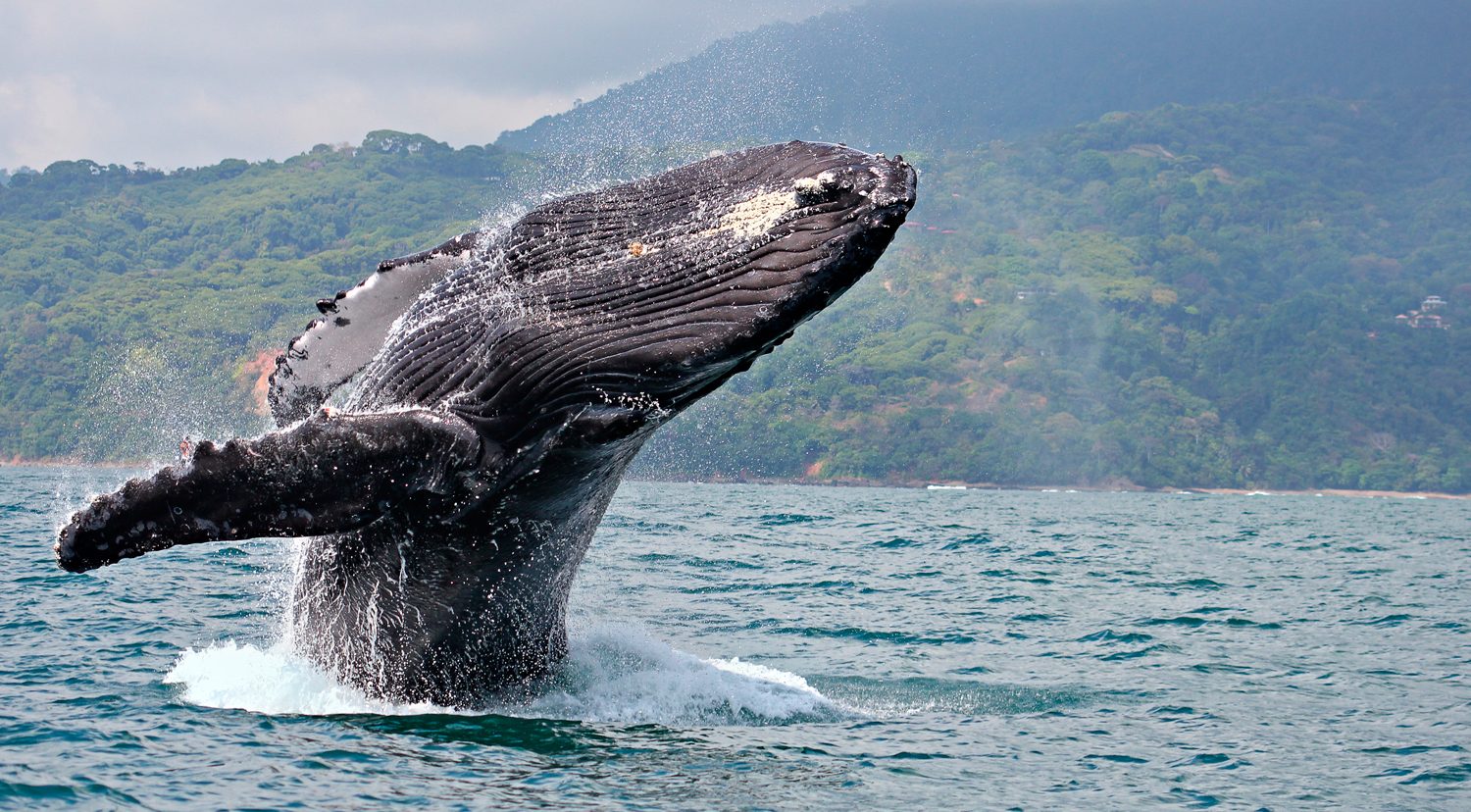
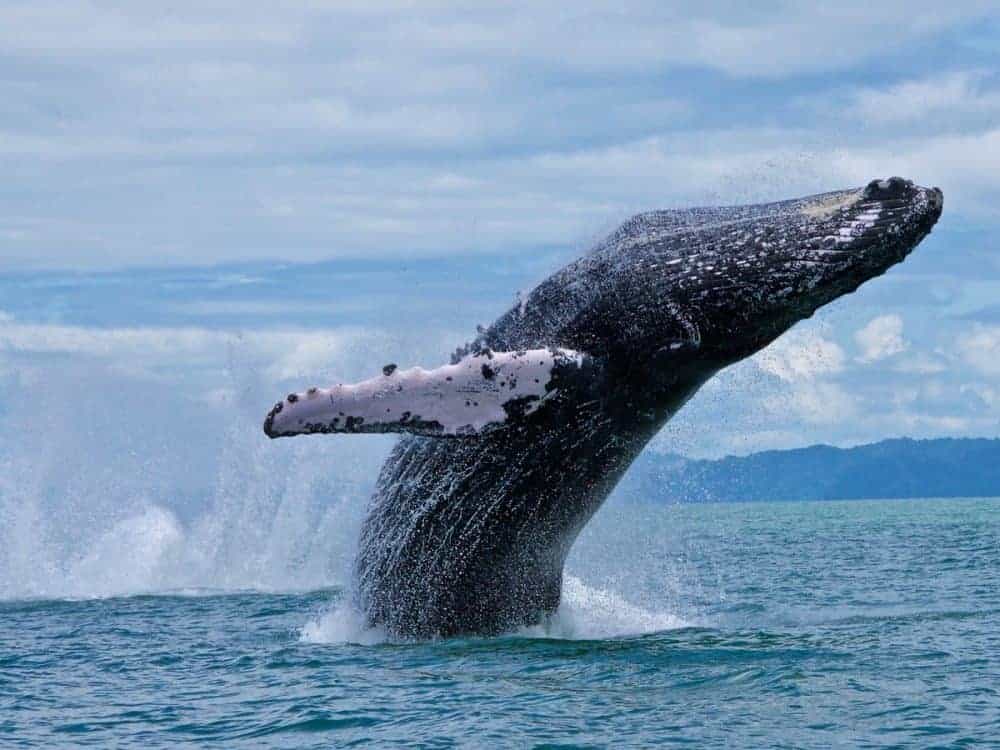
A tail fluke rises 30 meters to starboard, water streaming from its trailing edge as the whale begins a deep dive. The boat drifts closer. A calf breaches twice in succession, its 8-meter body clearing the surface before crashing sideways in an explosion of white water. The mother surfaces beside you, her barnacle-encrusted head visible beneath the clear water before she exhales a misty plume that carries across the deck. You photograph the fluke as she dives again, the unique pattern of white markings allowing researchers to track her migration.

Bottlenose dolphins appear off the bow, riding the pressure wave as the captain motors toward a second pod. You count 12 animals, including three calves. A spotted dolphin spins vertically, its spotted flanks catching sunlight. The captain points to a loggerhead turtle drifting past a jellyfish bloom before steering back toward shore as the sea breeze builds.

Costa Rica Whale Watching Tour
Everything You Need to Know

Your complete Costa Rica Whale Watching guide

All the details about your upcoming adventure in one place

Marino Ballena National Park protects 13,000 acres of Pacific coastline where two humpback whale populations converge in the only recorded year-round migration overlap on Earth. Northern Hemisphere humpbacks arrive from December through April after their 5,000-mile journey from Alaska and California.

Southern Hemisphere pods follow from July through November, traveling north from Antarctic feeding grounds. The park's signature Whale Tail sandbar — a natural tombolo visible only at low tide — extends 800 meters into warm coastal waters that average 28°C, creating ideal calving conditions for newborn whales and their mothers.

Established in 1990 as Costa Rica's first marine protected area, the park encompasses coral reefs, rocky outcrops, and mangrove estuaries that support 25 species of dolphins and whales. Humpback mothers teach breach techniques to calves in the shallow bay. Bottlenose dolphins hunt in coordinated pods of 40 or more. Spotted dolphins ride bow waves. Pilot whales patrol deeper channels beyond the reef line. Sea turtles nest on Playa Uvita's dark sand from May through October. The convergence of warm tropical currents and nutrient-rich upwellings from the Cocos Ridge 300 miles offshore sustains one of the Pacific's densest concentrations of marine megafauna.

Uvita's whale watching tours operate from the village boat ramp adjacent to the park entrance. Captains certified by the Costa Rican Tourism Board follow strict approach protocols: boats maintain 100-meter distance from whales, engine speeds drop to five knots within 200 meters, and groups limit viewing time to 30 minutes per pod. Morning departures between seven and ten o'clock align with low tide access and calmer seas before afternoon winds arrive. The rainy season from May through November brings higher whale activity as plankton blooms attract baitfish that draw predators. Dry season months from December through April offer clearer visibility and more predictable weather.

The park's conservation fee of six dollars per adult visitor funds marine patrol boats and research programs tracking individual whales through photo identification of tail flukes. Scientists have catalogued over 300 distinct humpbacks returning to Marino Ballena across multiple seasons, including one female first photographed in 1996 who has calved in these waters seven times.


Two humpback whale populations converge here in the only recorded year-round migration overlap on Earth

Dress code

Wear light, moisture-wicking clothing and sturdy water shoes for traversing rocky tide pools. A hat and sunglasses are recommended for long hours in the sun.

Bags & security

Security checks may be performed at the entrance. Avoid bringing unnecessary valuables as there is no secure storage on-site.

Photography

Commercial photography requires advance permits. Drone usage is strictly prohibited to protect local wildlife.

Families & strollers

Children under 11 enter for free. Monitor children closely near the water as tide shifts can occur quickly.

Accessibility

The park features natural beach terrain which can be difficult for wheelchairs. Sand conditions vary significantly by tide level.

Food & drink

Prepared food and water are permitted, but please carry all trash out of the park. Alcohol and single-use plastics are prohibited.

Not allowed

× Drones × Alcohol × Liquor × Drugs × Weapons × Single-use plastics × Grills × Firearms × Commercial signage × Fishing gear × Pets × Fireworks

What to bring

✓ Reef-safe sunscreen ✓ Reusable water bottle ✓ Water shoes ✓ Towel ✓ Swimsuit ✓ Camera ✓ Light snacks

Opening hours

Mon 07:00–16:00
Tue 07:00–16:00
Wed 07:00–16:00
Thu 07:00–16:00
Fri 07:00–16:00
Sat 07:00–16:00
Sun 07:00–16:00

How to get there

At a glance

Opening Hours

07:00–16:00

Address

Uvita, Puntarenas Province, Costa Rica

Accessibility

Beach trails and designated public use areas

Best arrival window

07:00–10:00

Storage

No lockers available inside the park

Official site

https://www.sinac.go.cr/ES/ac/acosa/pnmb/Paginas/default.aspx

Cancellation policy

Entry tickets are valid for the date of purchase. The 6 USD conservation fee is non-refundable.

Plan your time

Planning Your Costa Rica Whale Watching Tour Schedule and Duration

Recommended time

Half a day

Most visitors spend roughly four hours in the park, which allows enough time to complete a costa rica whale watching tour before the marine life settles during the afternoon. Aligning your arrival with low tide is essential for accessing the Whale Tail sandbar while avoiding peak heat. By securing your costa rica whale watching tour tickets early, you can navigate the marine sanctuary before the heaviest visitor volume arrives mid-day. Utilizing these costa rica whale watching tour tours slots ensures you remain ahead of the crowds while exploring the Uvita coastline and local biodiversity.

Crowd levels through the day

07:00–08:30 Light
08:30–10:00 Moderate
10:00–12:00 High
12:00–14:00 Peak
14:00–16:00 Moderate
The story

The history of Costa Rica Whale Watching

The waters off Costa Rica's southern Pacific coast remained unprotected until 1989, when the Costa Rican government designated a small marine corridor near Uvita as a refuge for migrating humpback whales. Local fishermen had long observed annual arrivals of enormous cetaceans, but no formal study documented the phenomenon until marine biologist Steven Swartz published findings in 1986 showing that both Northern and Southern Hemisphere humpback populations converged here—one of the planet's few dual-migration zones. The Costa Rica whale watching tour industry began informally in the early 1990s, when a handful of boat operators started ferrying marine researchers and curious travelers to observe breaching whales. In 1992, Legislative Decree 6919 expanded the protected zone into Marino Ballena National Park, named for the Spanish word for whale and encompassing 110 terrestrial hectares and 5,375 marine hectares. The park's signature whale-tail sandbar, visible only at low tide, became a global icon after National Geographic featured it in a 1999 aerial photograph. Early costa rica whale watching tour operations faced enforcement challenges. Unregulated boats approached whales too closely, prompting SINAC—the National System of Conservation Areas—to publish proximity guidelines in 2001 requiring 100-meter minimum distances. A 2004 collision between a speedboat and a whale calf near Isla Ballena triggered stricter licensing rules. By 2008, only certified operators with trained naturalist guides could offer commercial whale watching tours. The 2010s brought seasonal surges in visitor numbers, particularly during the August-to-October Northern Hemisphere migration and December-to-April Southern Hemisphere migration. In 2017, the park instituted a conservation entrance fee structure to fund marine patrols and habitat monitoring. Today, Marino Ballena National Park hosts over 50,000 annual visitors, with humpback whale sightings documented on roughly 80 percent of tours during peak migration windows. The Whale Tail formation remains the park's most photographed landmark, accessible during low-tide windows when visitors walk across the exposed sandbar.

1986

Steven Swartz documented dual humpback whale migrations converging off Uvita's coast

1989

Costa Rican government designated the marine corridor as a cetacean refuge zone

1992

Legislative Decree 6919 established Marino Ballena National Park with 5,375 marine hectares

2001

SINAC published proximity guidelines requiring boats to maintain 100-meter distance from whales

2008

Commercial whale watching restricted to certified operators with trained naturalist guides

2017

Conservation entrance fee implemented to fund marine habitat monitoring and patrols

Photo spots

Best Photo Locations for Your Costa Rica Whale Watching Tour

Whale Tail Sandbar

Whale Tail Sandbar

Best light · Before 09:00

Capture the iconic tombolo formation at low tide by walking out onto the natural causeway connecting the mainland to the reef. This vantage point provides a clear perspective of the coastal jungle edge.

Gallery

Moments from Costa Rica Whale Watching

With kids

Family Logistics for a Costa Rica Whale Watching Tour

Planning a costa rica whale watching tour with children requires balancing patience with the unpredictable nature of marine life. This coastal experience offers a unique chance for young observers to spot humpback whales and dolphins in their natural habitat.

Sea Sickness

Before booking your costa rica whale watching tour tours, consult a physician about non-drowsy motion sickness prevention for children. Most boats operate in open waters where swells can affect sensitive stomachs quickly.

Age Suitability

When selecting costa rica whale watching tour tickets, look for providers that cater to younger passengers with shaded boats and stable hulls. Children under five may find long excursions tiring, so verify the minimum age policy with your specific operator.

Facilities

The park lacks extensive changing stations or private nursing areas, so plan for basic rustic conditions near the beach access points. Prepare a dedicated dry bag with essential supplies before you arrive to address the lack of on-site amenities.

Pacing

To ensure a successful outing, follow the recommended arrival window of 07:00–10:00 to avoid mid-day heat. This schedule aligns with low tide, making the walk to the famous Whale Tail sandbar more manageable for little legs while keeping your costa rica whale watching tour tour on track.

Food & drink

Where to Eat Near Your Costa Rica Whale Watching Tour

Marino Ballena National Park has no dining facilities inside, so plan to visit nearby Uvita eateries after your costa rica whale watching tour. These venues offer convenient options for refueling following your marine wildlife excursion.

El Hornito

$5-15

Bakery — 5 min walk

Known for fresh empanadas and local pastries that serve as a quick post-tour snack. It provides a simple environment for grabbing food after securing your costa rica whale watching tour tickets. ;Marino Ballena Restaurant

FAQ

Costa Rica Whale Watching — frequently asked questions

Everything you need to know for your journey

Ready for Adventure?

Join thousands of happy travelers who have discovered this incredible experience

Book Your Experience Now